
Demystifying the IVF Process: A Step-by-Step Guide From First Injection to Embryo Transfer
Feeling overwhelmed by the idea of IVF? Explore our comprehensive step-by-step guide to In Vitro Fertilization, from medication priming and retrieval to embryo transfer.
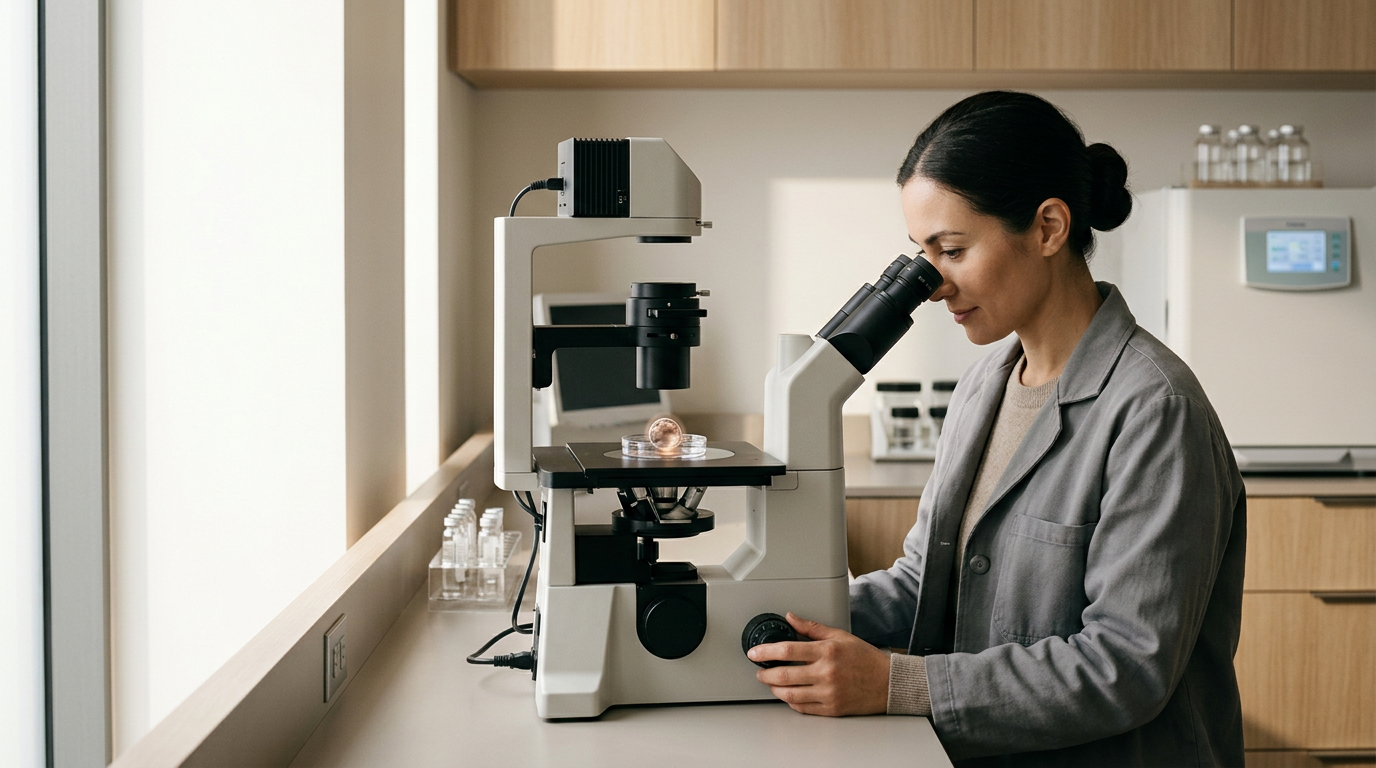
When you first hear the recommendation to move forward with In Vitro Fertilization (IVF), your emotions are often a complex mix of relief, hope, and overwhelming anxiety.
On one hand, IVF is one of the most effective and revolutionary medical treatments in human history, having helped bring millions of babies into the world. On the other hand, the medical jargon can feel intimidating. You are suddenly faced with calendars filled with medications, daily injections, regular ultrasound monitoring, and complex acronyms like ICSI, PGT-A, and FET.
It is completely normal to feel apprehensive about the physical and emotional commitment.
However, knowledge is the best antidote to fertility anxiety. When you break the IVF journey down into its distinct, manageable phases, the process becomes predictable, structured, and deeply empowering.
Here is your comprehensive, step-by-step clinical roadmap of what actually happens during an IVF cycle.
The Core Concept: What Does IVF Actually Do?
In a natural monthly cycle, your ovaries recruit a group of small follicles, but your body produces only enough natural FSH (Follicle-Stimulating Hormone) to mature a single egg. The remaining follicles in that group naturally dissolve and are lost (a process called atresia).
IVF does not "use up" future eggs. Instead, it uses temporary, bio-identical hormone medications to "rescue" and mature the entire cohort of eggs your body was already going to lose that month.
Once matured, those eggs are gently retrieved, fertilized in a specialized embryology laboratory, cultured into blastocyst embryos, and carefully transferred back into a perfectly prepared uterine lining.
The 6 Phases of an IVF Cycle
While protocols are customized for your specific ovarian reserve and hormone profile, a standard IVF cycle follows six sequential phases:
Phase 1: Ovarian Priming & Suppression:
Weeks 1 to 3.
Before stimulation begins, your cycle is coordinated using birth control pills, estrogen patches, or progestin. Priming prevents a "lead follicle" from growing prematurely, ensuring all available follicles start at the exact same baseline size for synchronized growth.Phase 2: Ovarian Stimulation & Monitoring:
Days 1 to 10–12.
You begin daily subcutaneous injections of gonadotropins (FSH and LH) to stimulate multiple follicles. Over the next 10 to 12 days, you visit the clinic every 2 to 3 days for transvaginal ultrasounds and blood estradiol checks to monitor follicle growth.Phase 3: The Trigger Shot:
36 Hours Pre-Retrieval.
When your lead follicles reach optimal maturity (typically 18–22mm), you administer a precisely timed "trigger shot" (hCG or Lupron). This initiates the final chromosomal maturation of the eggs and loosens them from the follicle walls for retrieval.Phase 4: Egg Retrieval & Fertilization:
Retrieval Day.
Under light intravenous sedation, a doctor uses ultrasound guidance and a delicate needle to aspirate follicular fluid and collect mature eggs (taking about 15–20 minutes). On the same day, sperm is prepared, and eggs are fertilized using standard insemination or ICSI (Intracytoplasmic Sperm Injection).Phase 5: Embryo Culture & PGT-A Biopsy:
Days 1 to 6 Post-Retrieval.
Fertilized eggs (zygotes) grow in controlled incubators for 5 to 6 days until they reach the advanced blastocyst stage. If desired, a few cells from the outer layer (placenta-to-be) are biopsied for PGT-A (genetic testing) before embryos are safely vitrified (flash-frozen).Phase 6: Endometrial Preparation & Embryo Transfer:
Subsequent Cycle.
Your uterine lining is primed with estrogen and progesterone until it reaches optimal thickness and pattern. In a simple, painless 5-minute in-office procedure, a single embryo is guided via a soft catheter directly into your uterine cavity.
What IVF Controls vs. What You Control
A common misconception is that the IVF laboratory handles everything. While the lab provides optimal conditions for fertilization and early embryonic growth, the ultimate outcome is built on a shared foundation:
What the Clinic Controls
Precision Dosing: Customizing your stimulation medications to maximize egg yield while minimizing the risk of Ovarian Hyperstimulation Syndrome (OHSS).
Embryology Excellence: Maintaining strict air quality, temperature, and pH environments that mimic the natural fallopian tubes and uterus.
Micromanipulation Tools: Utilizing microfluidic sperm sorting (like Zymōt) and ICSI to overcome severe male factor barriers.
What You Control in the 90 Days Prior
Mitochondrial Support: Fueling egg and sperm cells with high-dose antioxidants (like Ubiquinol/CoQ10) during their final 90-day maturation window before injections start.
Metabolic Stability: Keeping blood sugar stable to maintain a low-inflammation follicular microenvironment.
Pelvic Blood Flow: Engaging in low-impact movement, proper hydration, and stress reduction to support uterine and ovarian circulation.
Fresh vs. Frozen Embryo Transfer: Why "Freeze-All" is Now the Standard
In the early days of IVF, embryos were transferred fresh just 3 to 5 days after egg retrieval.
Today, modern fertility clinics heavily utilize Frozen Embryo Transfers (FET):
A Calmer Uterine Environment: During an egg retrieval cycle, your estrogen levels are artificially high from stimulation medications, which can make the uterine lining less receptive. Freezing the embryos allows your hormones to reset to natural physiological levels before transfer.
Genetic Testing (PGT-A): Freezing allows time to screen embryos for chromosomal balance (aneuploidy), significantly reducing miscarriage rates and shortening the time to a healthy live birth.
Eliminating OHSS Risk: Giving the ovaries time to recover completely eliminates the risk of late-onset Ovarian Hyperstimulation Syndrome.
You Are Stronger Than You Think
The thought of going through IVF can feel daunting when looking at the entire process all at once. But remember: you do not have to live the entire cycle in a single day.
You take IVF one injection, one ultrasound, and one milestone at a time, supported by a dedicated team of clinical experts who are monitoring your health at every step.
If you are ready to discuss your options, evaluate your ovarian reserve, and design a customized treatment protocol tailored to your family goals, schedule an IVF consultation with our team today.
FAQs
-
Most patients are pleasantly surprised to find that IVF injections are far less painful than anticipated. The vast majority of stimulation medications use very small, ultra-fine needles (identical to diabetic insulin needles) that are injected into the subcutaneous fat of the lower abdomen. Any discomfort is typically mild and fleeting. Using ice packs or over-the-counter numbing cream prior to injection can minimize sensation even further.
-
No. In modern fertility clinics, egg retrieval is performed under light intravenous (IV) sedation (monitored anesthesia care). You are completely asleep, comfortable, and pain-free throughout the entire 15- to 20-minute procedure. You wake up shortly afterward in the recovery suite with mild period-like cramping, which is easily managed with oral medication.
-
On average, ovarian stimulation requires 10 to 12 days of daily injections. The exact duration depends entirely on how your individual follicles respond to the medications during your regular ultrasound monitoring appointments.
-
In standard IVF, tens of thousands of sperm are placed in a petri dish with a retrieved egg, allowing fertilization to occur naturally. In ICSI (Intracytoplasmic Sperm Injection), an embryologist selects a single, structurally optimal sperm under a high-power microscope and injects it directly into the center of the mature egg. ICSI is highly recommended for cases of male factor infertility, elevated sperm DNA fragmentation, or past low fertilization rates.
-
In fertility communities, the "IVF funnel" or "attrition rate" refers to the natural biological drop-off that occurs at each stage of embryo development. Not every follicle contains a mature egg; not every mature egg fertilizes; and only about 30% to 50% of fertilized eggs successfully grow into day-5 blastocysts. This natural drop-off is expected and reflects your body’s process of selecting only the strongest, most genetically robust cells.
-
If you are doing a "fresh" transfer, the embryo is transferred 5 days after retrieval. If you are doing a "frozen embryo transfer" (FET) or awaiting PGT-A genetic screening results, the transfer typically takes place during your next menstrual cycle, roughly 4 to 6 weeks after your retrieval, once your natural hormone levels have reset.
References
Adamson, G. D., et al. (2021). International Committee for Monitoring Assisted Reproductive Technologies: World report on assisted reproductive technology. Fertility and Sterility, 116(4), 910-925.
Practice Committee of the American Society for Reproductive Medicine. (2020). Guidance on the limits to the number of embryos to transfer: A committee opinion. Fertility and Sterility, 114(4), 771-778.
Roque, M., et al. (2019). Fresh versus elective frozen embryo transfer in IVF/ICSI cycles: A systematic review and meta-analysis of reproductive outcomes. Human Reproduction Update, 25(1), 2-14.