
Wondering if it’s implantation bleeding or your period?
Learn the signs, timing, color, duration, and when to take a pregnancy test.
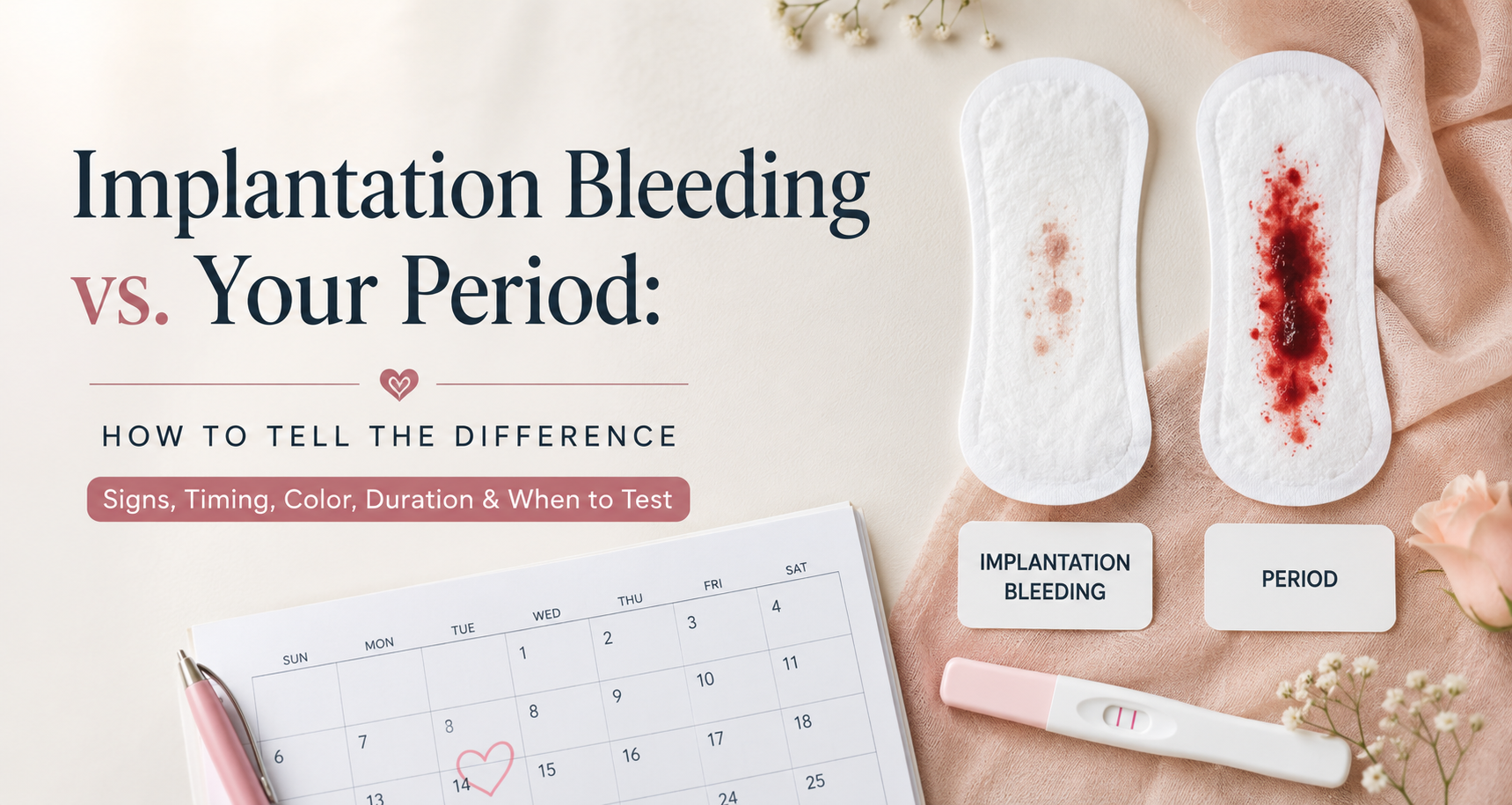
🤔 Is It Implantation Bleeding… or Is My Period Starting?
If you’re trying to conceive, seeing light spotting can bring up one big question:
“Could I be pregnant?”
One of the most searched fertility questions is how to tell the difference between implantation bleeding and the start of a menstrual period.
While the two can look similar, there are important differences in timing, color, flow, and duration that may provide clues.
Here’s what you need to know.
🧬 What Is Implantation Bleeding?
Implantation bleeding is light spotting that may occur when a fertilized egg attaches to the lining of the uterus.
Not everyone experiences implantation bleeding, and if you do, it’s usually much lighter than a typical period.
It’s considered a normal early pregnancy symptom for some people.
📅 When Does Implantation Bleeding Happen?
Implantation usually occurs 6–12 days after ovulation.
For many people, this is just a few days before they expect their period, which is why it’s often confused with menstrual bleeding.
If you’re tracking ovulation, timing can provide an important clue.
🌸 Implantation Bleeding vs. Period: The Main Differences
Flow
Implantation bleeding:
Very light spotting
Often just a few drops
Usually doesn’t require a pad or tampon
Period:
Light to heavy flow
Typically becomes heavier over the first one to two days
Color
Implantation bleeding:
Light pink
Brown
Occasionally light rust-colored
Period:
Bright red or dark red
Often becomes heavier and darker over time
Duration
Implantation bleeding:
A few hours to two days
Period:
Usually three to seven days
Cramping
Implantation cramps are often described as:
Mild
Brief
Light pulling or tingling sensations
Menstrual cramps are typically stronger and may increase as bleeding becomes heavier.
Can Implantation Bleeding Be Heavy?
Generally, no.
Heavy bleeding with clots is much more likely to be a menstrual period than implantation bleeding.
If you’re experiencing unusually heavy bleeding, severe pain, or dizziness, contact your healthcare provider promptly.
When Should You Take a Pregnancy Test?
The most accurate results come after you’ve missed your period.
Testing too early can lead to a false negative because your body may not have produced enough hCG (the pregnancy hormone) yet.
If your test is negative but your period still doesn’t arrive, try testing again 48 hours later.
Does Everyone Have Implantation Bleeding?
No.
Many healthy pregnancies occur without any implantation bleeding at all.
Not experiencing spotting does not mean you’re less likely to be pregnant.
Other Early Pregnancy Signs
Besides implantation bleeding, early pregnancy symptoms may include:
Breast tenderness
Fatigue
Mild cramping
Increased urination
Nausea
Heightened sense of smell
Remember that these symptoms can also occur before a menstrual period, making it difficult to know for sure without a pregnancy test.
When Should You Speak With Your Doctor?
If you’re experiencing:
Heavy bleeding
Severe pelvic pain
Recurrent unusual spotting
Positive pregnancy test with significant bleeding
it’s important to seek medical advice.
Early evaluation can help determine what’s happening and provide peace of mind.
Final Thoughts
Spotting before your period can be confusing—especially when you’re hoping for a positive pregnancy test.
While implantation bleeding has some distinct characteristics, it’s impossible to confirm pregnancy based on spotting alone.
If you’re unsure, the best next step is to take a pregnancy test at the appropriate time and speak with your healthcare provider if you have concerns.
📍 Trying to conceive and have questions about your fertility?
Our team is here to help.
FAQs
-
Implantation bleeding is usually light pink, brown, or rust-colored spotting. It’s much lighter than a menstrual period and typically doesn’t become heavier over time. Many people only notice a few drops of blood or light spotting that lasts a short time.
-
Implantation bleeding typically lasts from a few hours up to two days. In contrast, a menstrual period usually lasts 3–7 days and often becomes heavier before gradually tapering off.
-
Yes. Because implantation bleeding often occurs 6–12 days after ovulation, it can happen just before your expected period. However, implantation bleeding is usually lighter in color, lighter in flow, and shorter in duration than a typical menstrual period.
-
For the most accurate result, wait until the first day of your missed period or a few days afterward. Testing too early may result in a false negative because your body may not have produced enough hCG (the pregnancy hormone) to be detected.
-
No. Most women do not experience implantation bleeding, and many healthy pregnancies occur without any spotting at all. The absence of implantation bleeding does not mean you’re less likely to be pregnant.
-
You should contact your healthcare provider if you experience:
Heavy bleeding similar to or heavier than a menstrual period
Severe abdominal or pelvic pain
Large blood clots
Dizziness or fainting
Bleeding after a positive pregnancy test
While light spotting can be normal, heavy bleeding should always be evaluated by a medical professional.