
Ovulation Tests Explained: How to Use OPKs to Get Pregnant Faster
Learn how ovulation predictor kits (OPKs) work, when to use them, how to read results, and tips to increase your chances of getting pregnant.
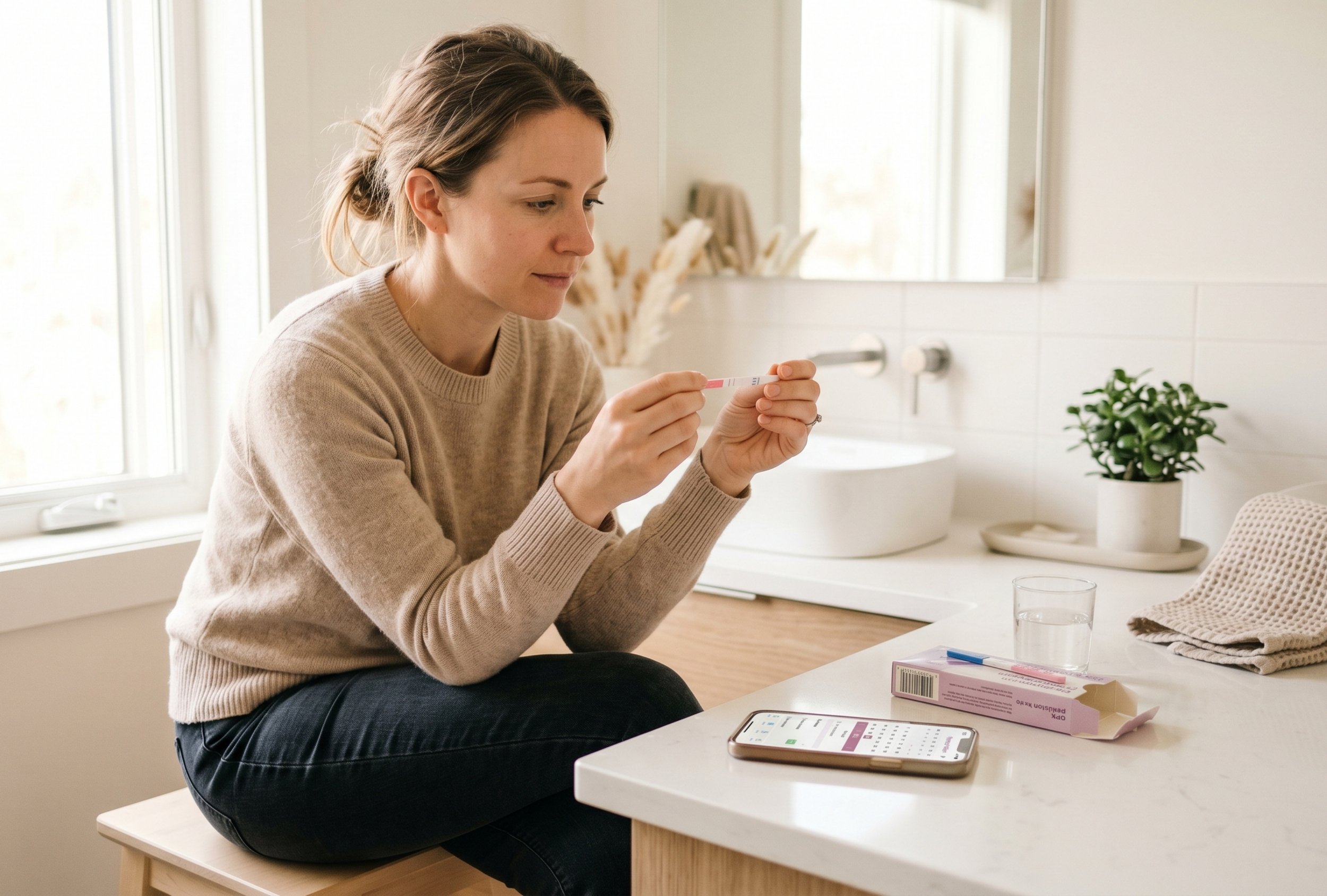
🤔 What Are Ovulation Tests?
Ovulation Predictor Kits (OPKs) are at-home tests that detect the luteinizing hormone (LH) surge in your urine.
This surge happens 24–36 hours before ovulation, making OPKs one of the most effective tools for identifying your most fertile days.
👉 In simple terms:
OPKs help you know exactly when to try.
⏳ Why Timing Matters for Pregnancy
You’re only fertile for a short window each cycle:
The 5 days before ovulation
The day of ovulation
Sperm can survive for up to 5 days, but the egg only lives 12–24 hours.
👉 Missing this window is one of the most common reasons people struggle to conceive.
🧪 How Do Ovulation Tests Work?
OPKs measure LH levels in your urine.
A negative result → no LH surge yet
A positive result → ovulation likely within 24–36 hours
This is your best time to have intercourse if you’re trying to conceive.
📅 When Should You Start Testing?
Start based on your cycle length:
28-day cycle → start testing around day 10–11
Shorter cycles → start earlier
Longer or irregular cycles → test for more days
👉 Testing at the same time each day helps improve accuracy.
📖 How to Read OPK Results
This is where many people get confused:
Positive: Test line is as dark or darker than control
Negative: Test line is lighter or absent
⚠️ A faint line does not mean positive.
🔄 How Often Should You Test?
Once daily is usually enough
Twice daily (morning + evening) can help catch short LH surges
👉 Some people have rapid surges that can be missed with once-a-day testing.
🚫 Common Mistakes to Avoid
Testing too early or too late in your cycle
Drinking too much water (can dilute LH levels)
Assuming a faint line is positive
Not having intercourse soon enough after a positive test
👉 OPKs are powerful—but only if used correctly.
⚠️ Do OPKs Work for Everyone?
OPKs work well for most people—but may be less reliable if you have:
PCOS (consistently high LH levels)
Irregular cycles
Hormonal imbalances
👉 In these cases, combining OPKs with other tracking methods can help.
💡 Tips to Get the Most Accurate Results
Test at the same time each day
Avoid excessive fluids before testing
Track results over multiple cycles
Combine with cervical mucus tracking
👉 The more data you have, the clearer your pattern becomes.
💬 Final Thoughts
Ovulation tests are one of the simplest and most effective tools for improving your chances of getting pregnant.
If you’ve been guessing your ovulation timing, OPKs can bring clarity, confidence, and better results.
📍 Want more fertility tips and expert guidance?
FAQs
-
Ovulation tests detect the luteinizing hormone (LH) surge, which happens 24–36 hours before ovulation. This helps you identify your most fertile days so you can time intercourse for the highest chance of conception.
-
It depends on your cycle length. For a typical 28-day cycle, start testing around day 10 or 11. If your cycles are irregular, you may need to test earlier and for more days to catch your LH surge.
-
A positive result means the test line is as dark or darker than the control line. This indicates an LH surge, and ovulation is likely to occur within the next 24–36 hours.
-
Most people test once per day, but testing twice daily (morning and evening) can help detect short LH surges that might otherwise be missed.
-
Yes. OPKs can give misleading results if you have conditions like PCOS, irregular cycles, or consistently high LH levels. Drinking too much water before testing can also dilute results.
-
You should have intercourse the day of your positive test and the following day. This timing aligns with your most fertile window and maximizes your chances of getting pregnant.